How to build with AI (without going insane)
All—In, Guernsey's AI Sprint. October 7th 2026
All—In, Guernsey's AI Sprint.
October 7th 2026






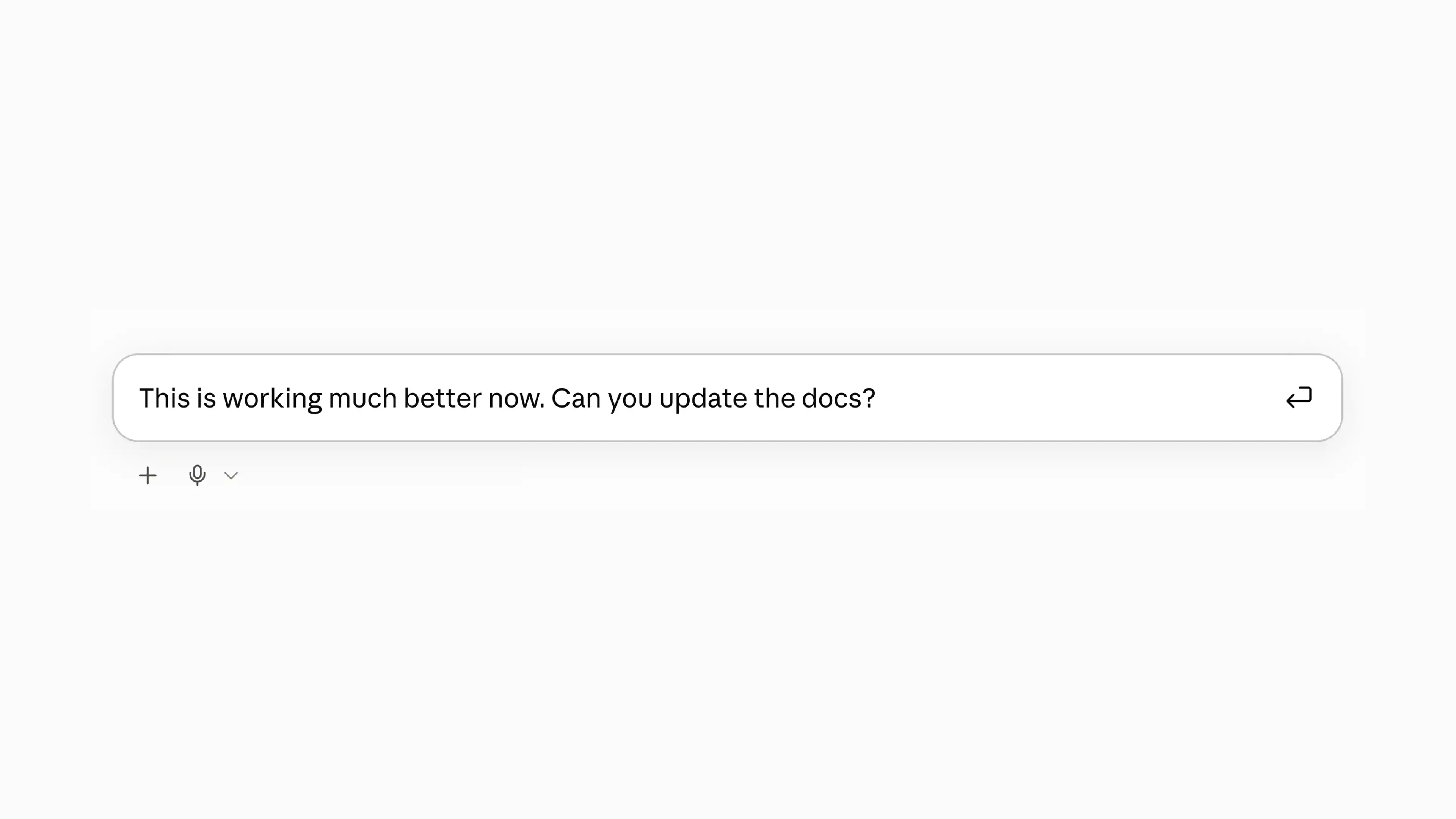

A while back, I was having a deep and meaningful with a colleague of mine - Claude (you might know him).
Alongside the usual platitudes “Matt, you’re so clever and cool” came a line that stopped me in my tracks.
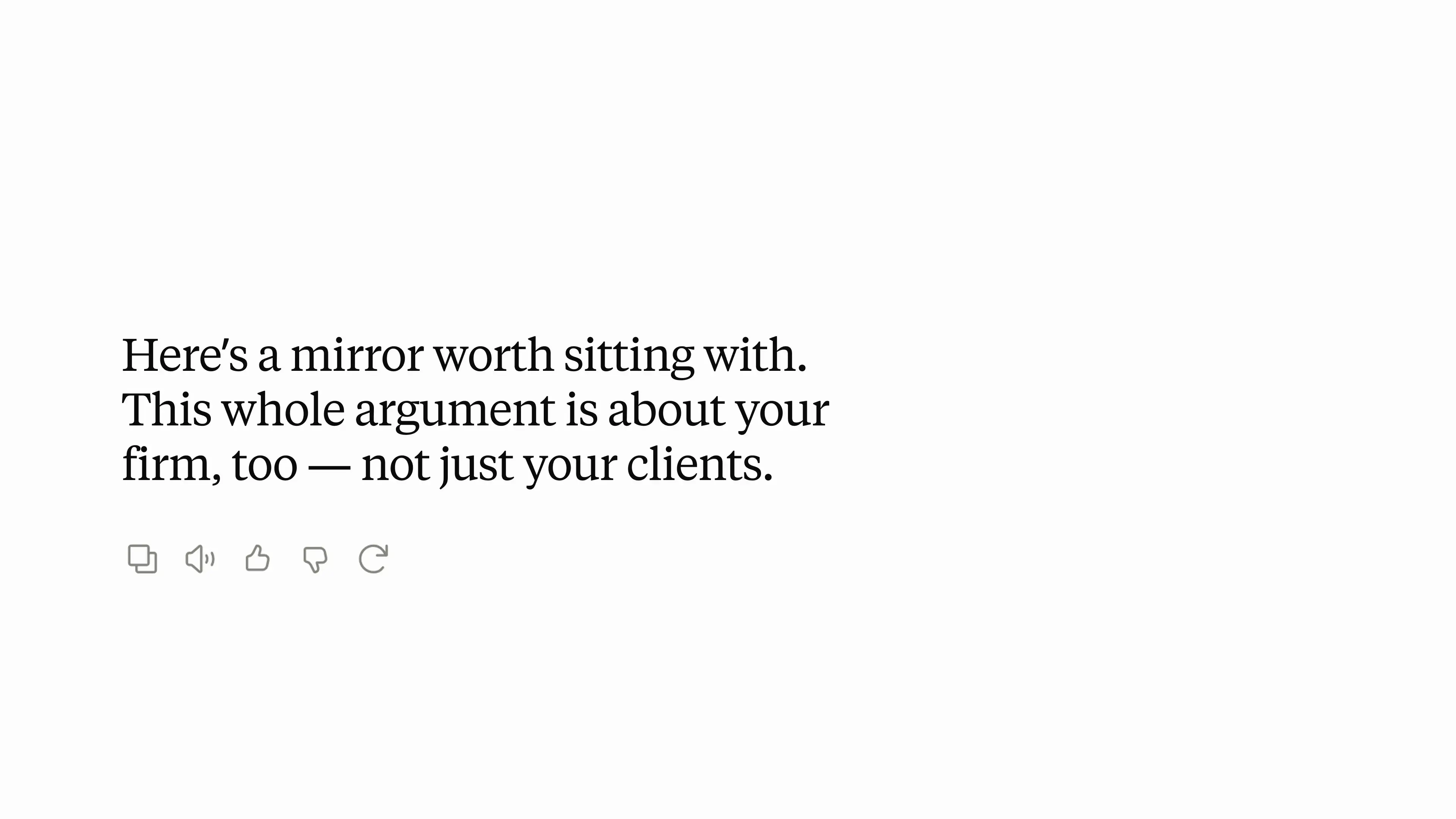
"Here’s a mirror worth sitting with: this whole argument is about your firm too - not just your clients.”
We were riffing on how competence is no longer enough.
He (it?) was right.
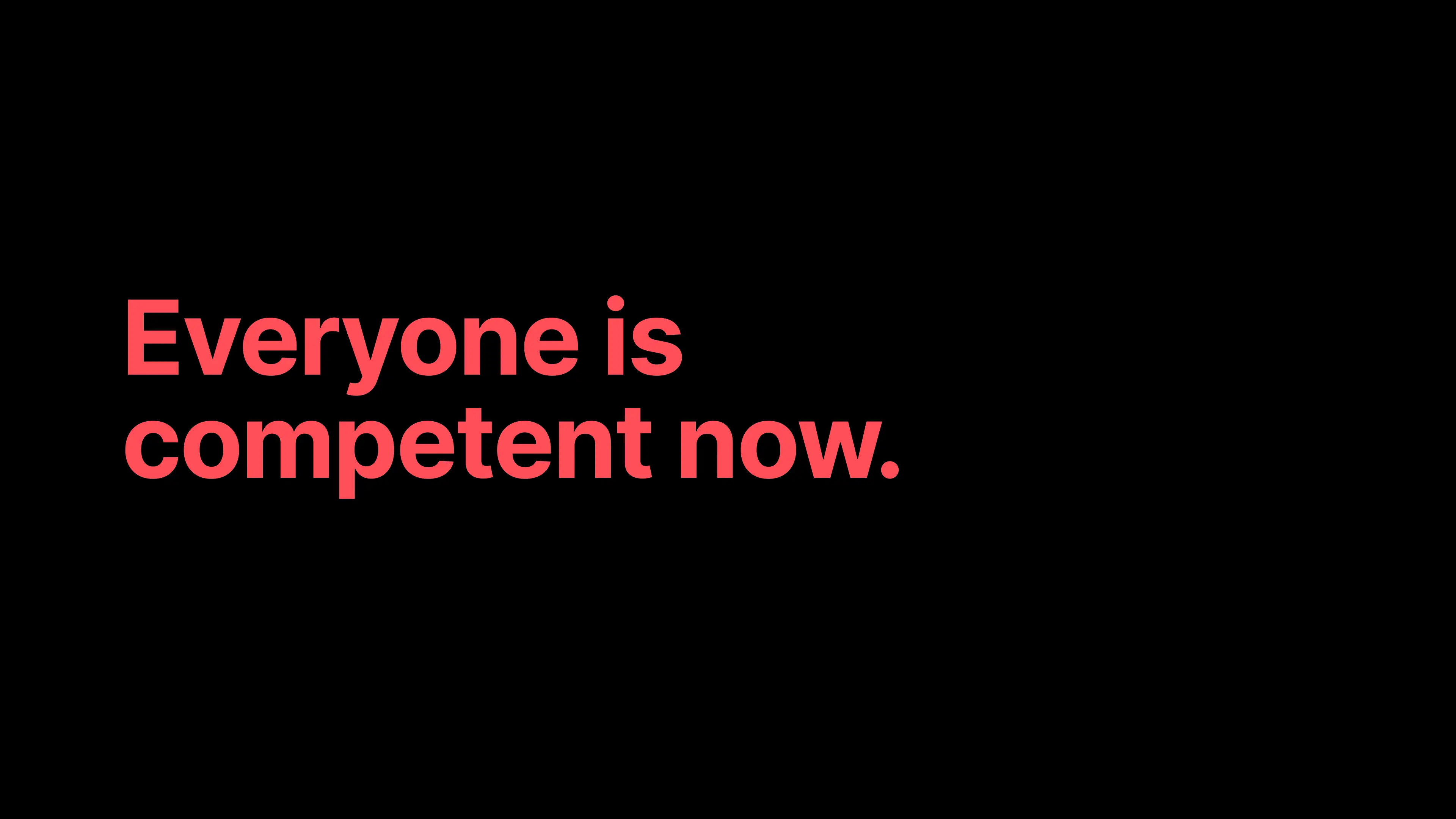
With LLMs, everyone is competent now. That changes the game for every business in this room.
I’ve spent my career helping clients invent, design and build complex software-based products.
Things like an incident management system for the official hospitality provider of the Paris Olympics,
a 3D map of the themes influencing Decathlon’s innovation pipeline,
or helping public affairs professionals navigate the firehouse of information coming out of the EU for Politico.
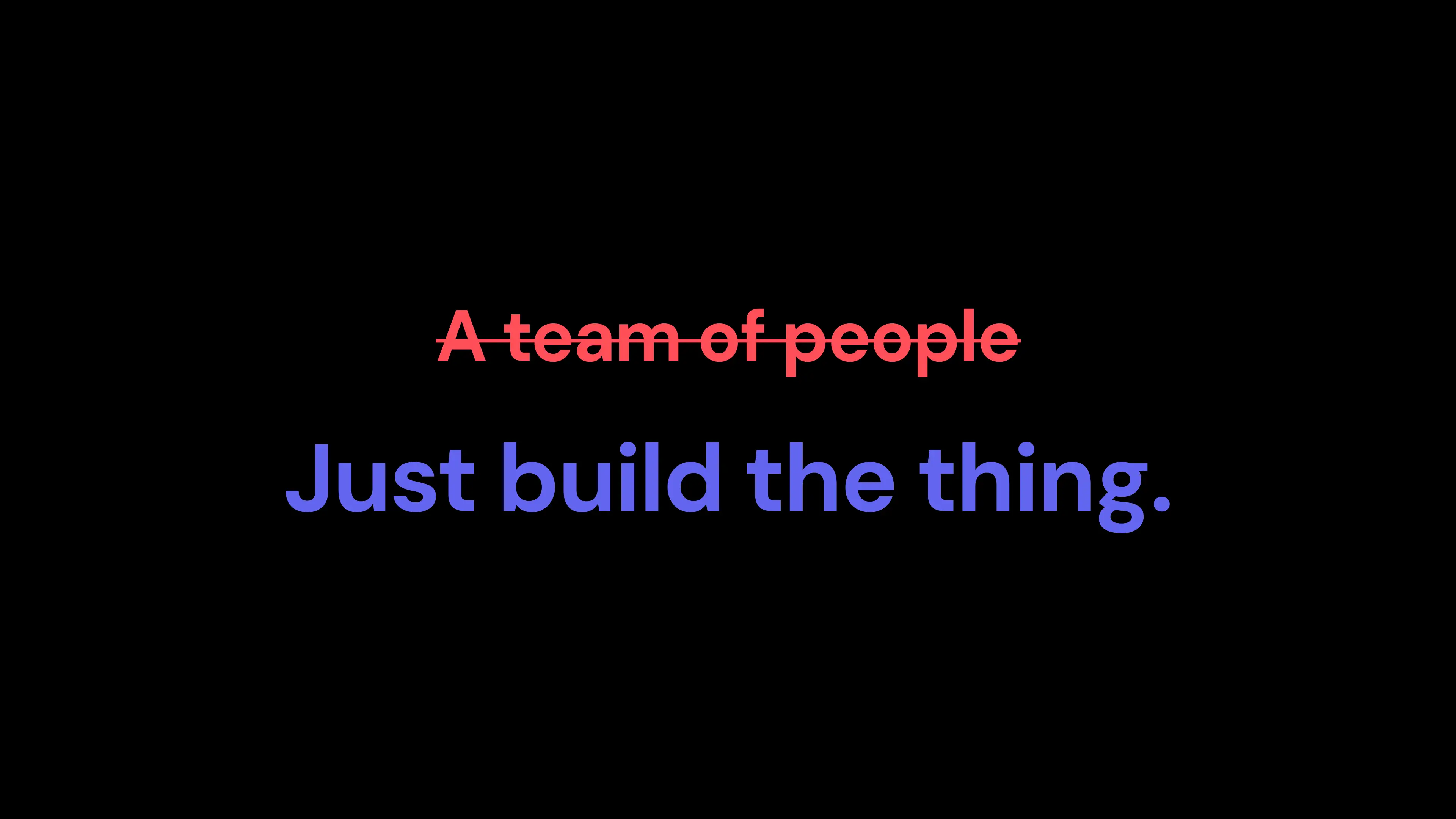
This used to take teams of people. Strategists, designers, product managers, devs...
In the last 18 months, all that has changed.
Today you can describe an idea to your AI of choice and have something working by lunchtime.
That’s cool. This is not a whinge. I’m excited by it. You - and I - can now build our own apps, change the way we do things, change the way our businesses run.
Building the thing is no longer the hard part.
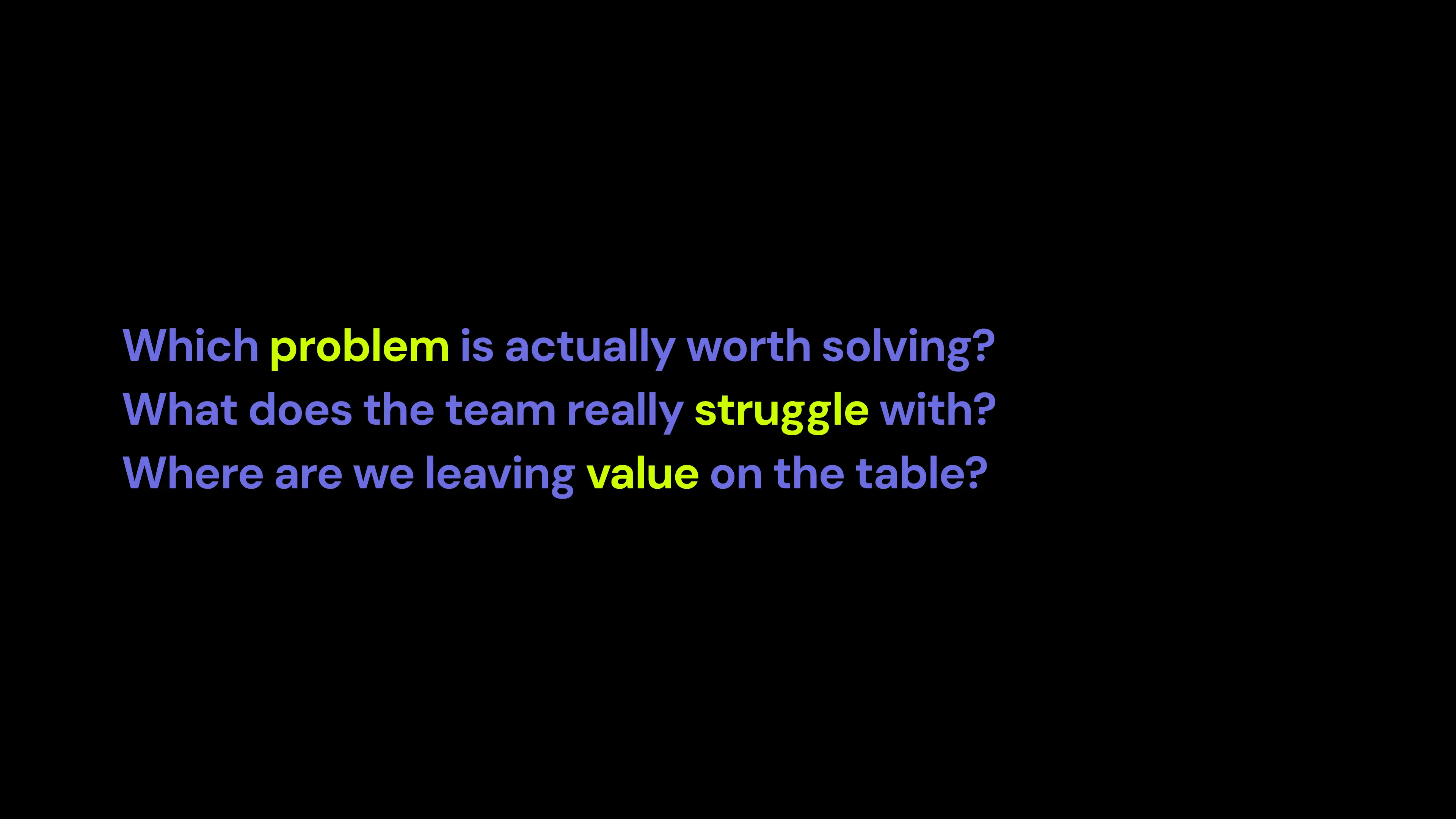
The hard part, now, is figuring out what to build - and dodging all those rabbit holes:
- Which problem is actually worth solving?
- What does the team really struggle with?
- Where are we leaving value on the table?
So to aim higher than just competent, I realised that I needed to eat my own dogfood - to build a tool that surfaces what’s actually worth building.
I wanted something that helps me be quicker AND better and to improve my thinking over time - not to blunt it.
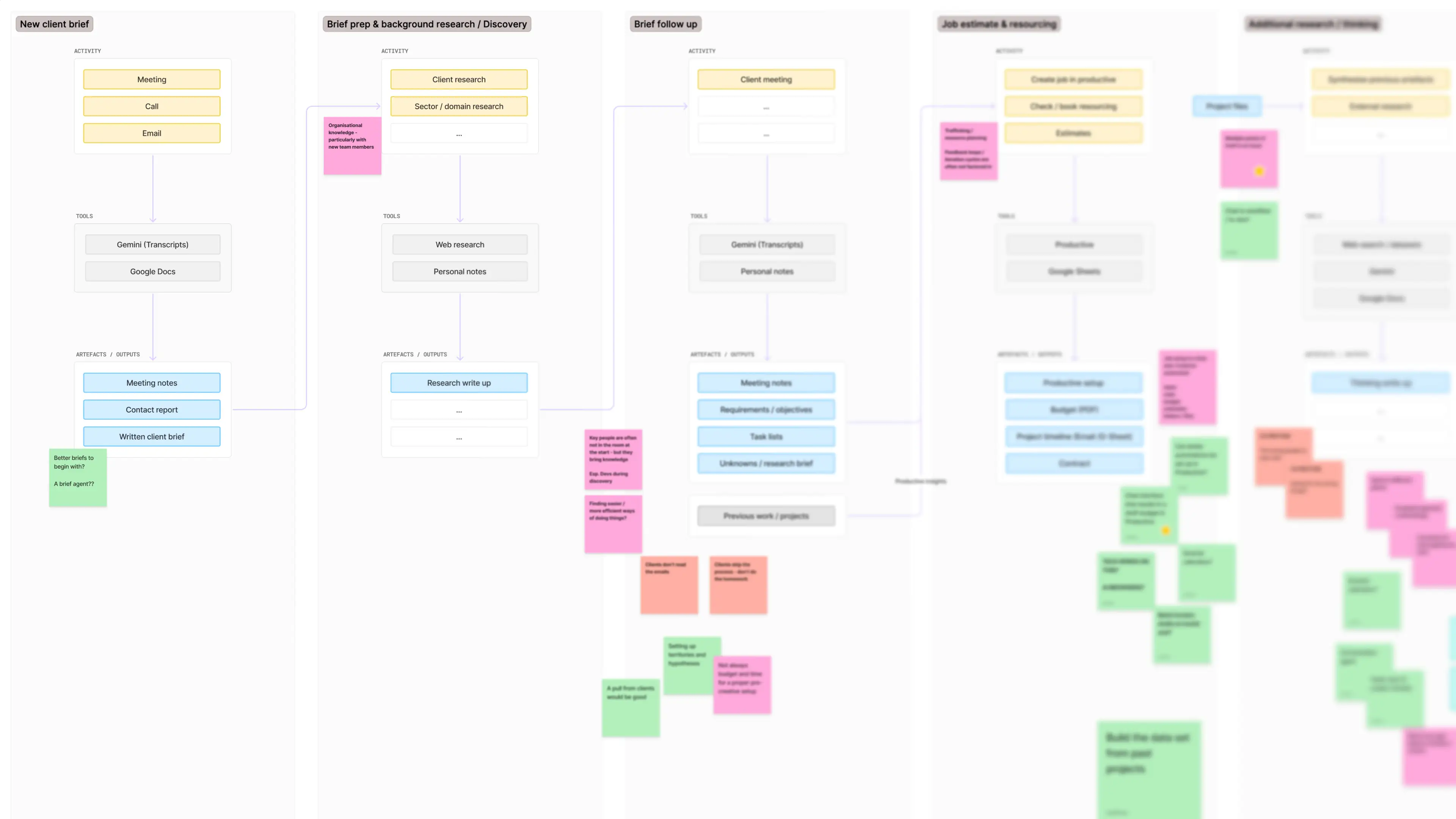
The standard procedure for this kind of work is to start with a stakeholder workshop - someone from sales or customer success, someone who does the work, someone from the leadership team.
I don’t think that’s changed. It extracts the things that only insiders know.
But it’s not perfect. You end up with 200 stickies that no one will ever read again. And you also seldom spot the opportunity there and then.
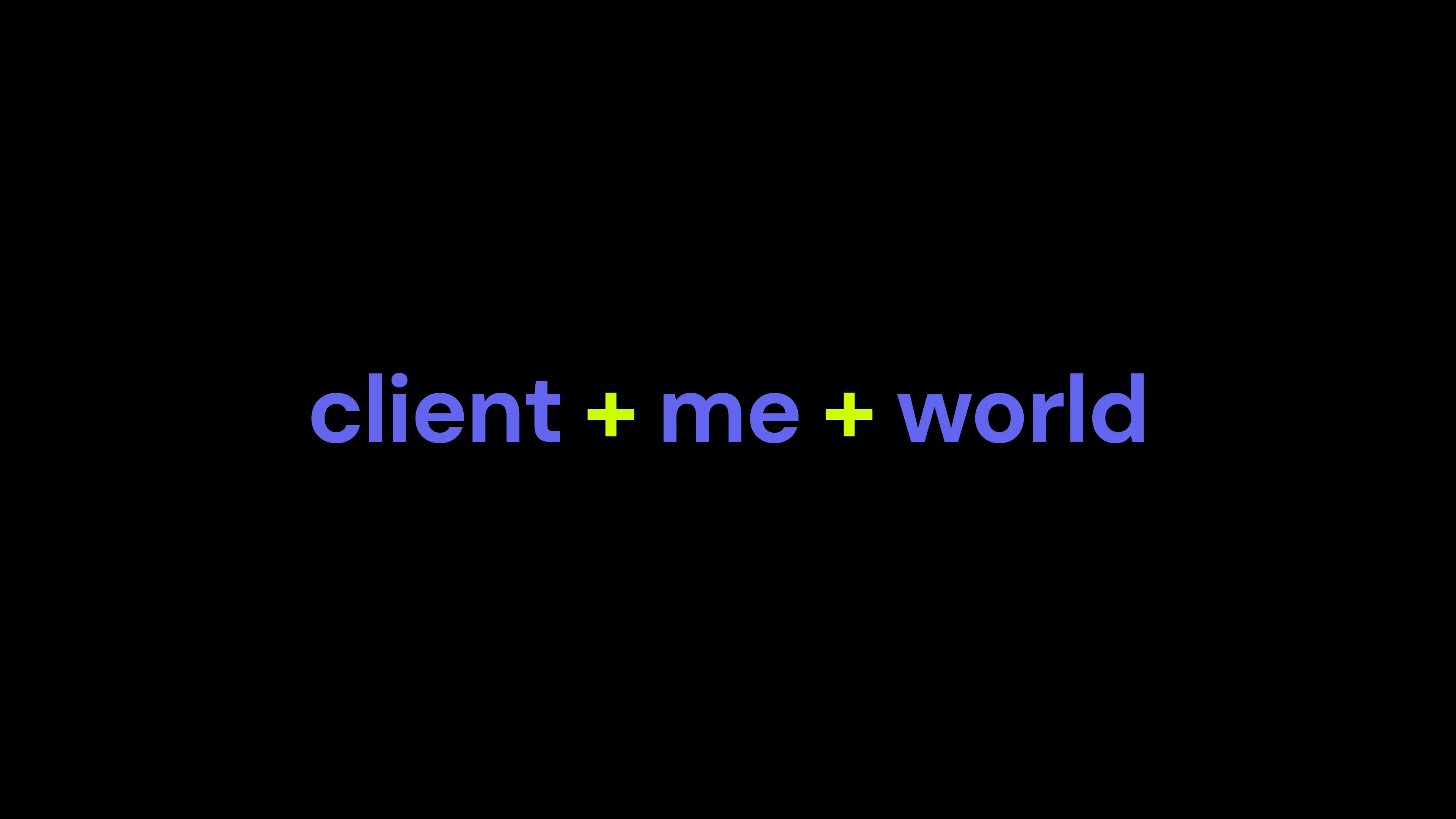
The best opportunities come from combining what the client knows with what I know - and what the world knows.
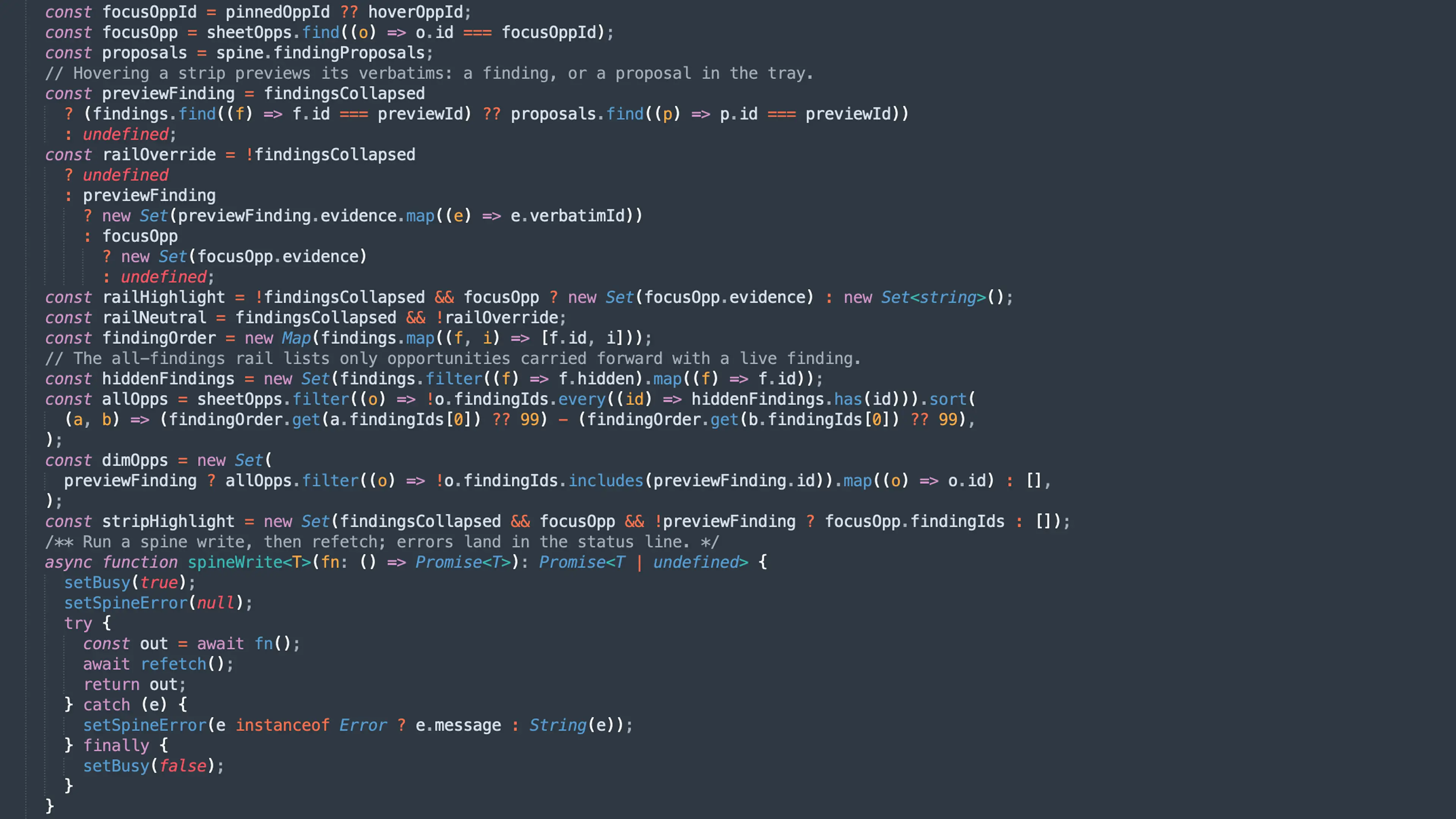
So that’s the machine I built.
A plugin that extracts the mess of what was said and gives it structure.
A process that turns that structure into clear findings - linked back to what people actually said.
And another that turns findings into things to go and do:
The quick wins you can start today...
The ones you can easily get off the shelf...
The value-adding things worth building out
If anyone is interested in hearing more about how this all comes together, come and say hi. I’d be happy to talk you through it.
What I wanted to share today is a quick, free and easy technique that has helped me a lot, along the way.
It’s based around the simple concept of a wiki.
Think Wikipedia - a page for each thing that matters.
Only this one is written by the AI. In plain language that you - and it - can pick up again at any time.
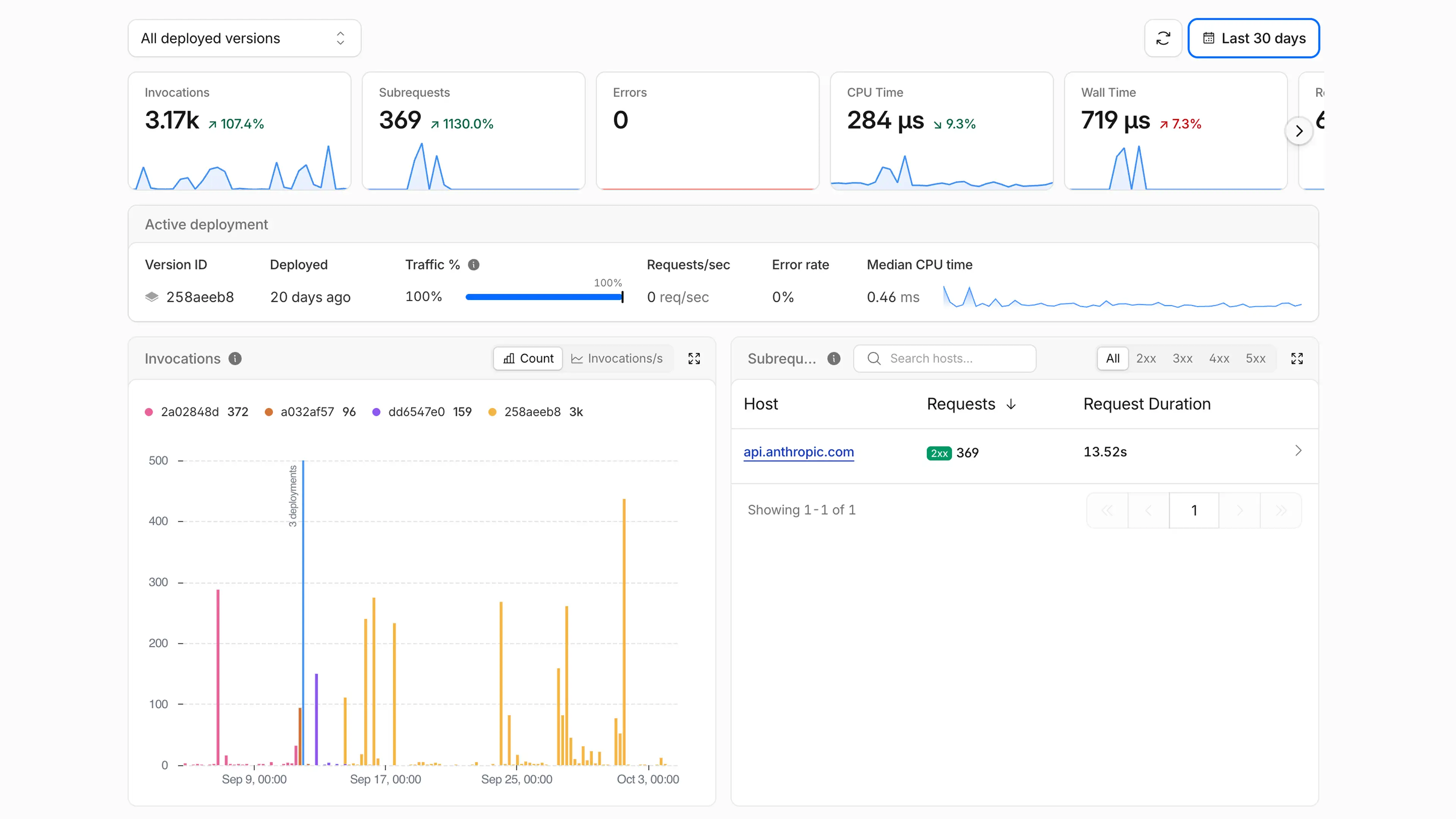
For me, this came out of necessity. I was building stuff with AI, but it quickly got ahead of me:
Code that I couldn’t follow.
Infrastructure that was way out of my comfort zone.
Terminal commands that made me think I was about to bring down the internet.
Most of all - because I hadn’t written it, I had no picture in my head of how it all fits together.
The wiki approach fixed that.
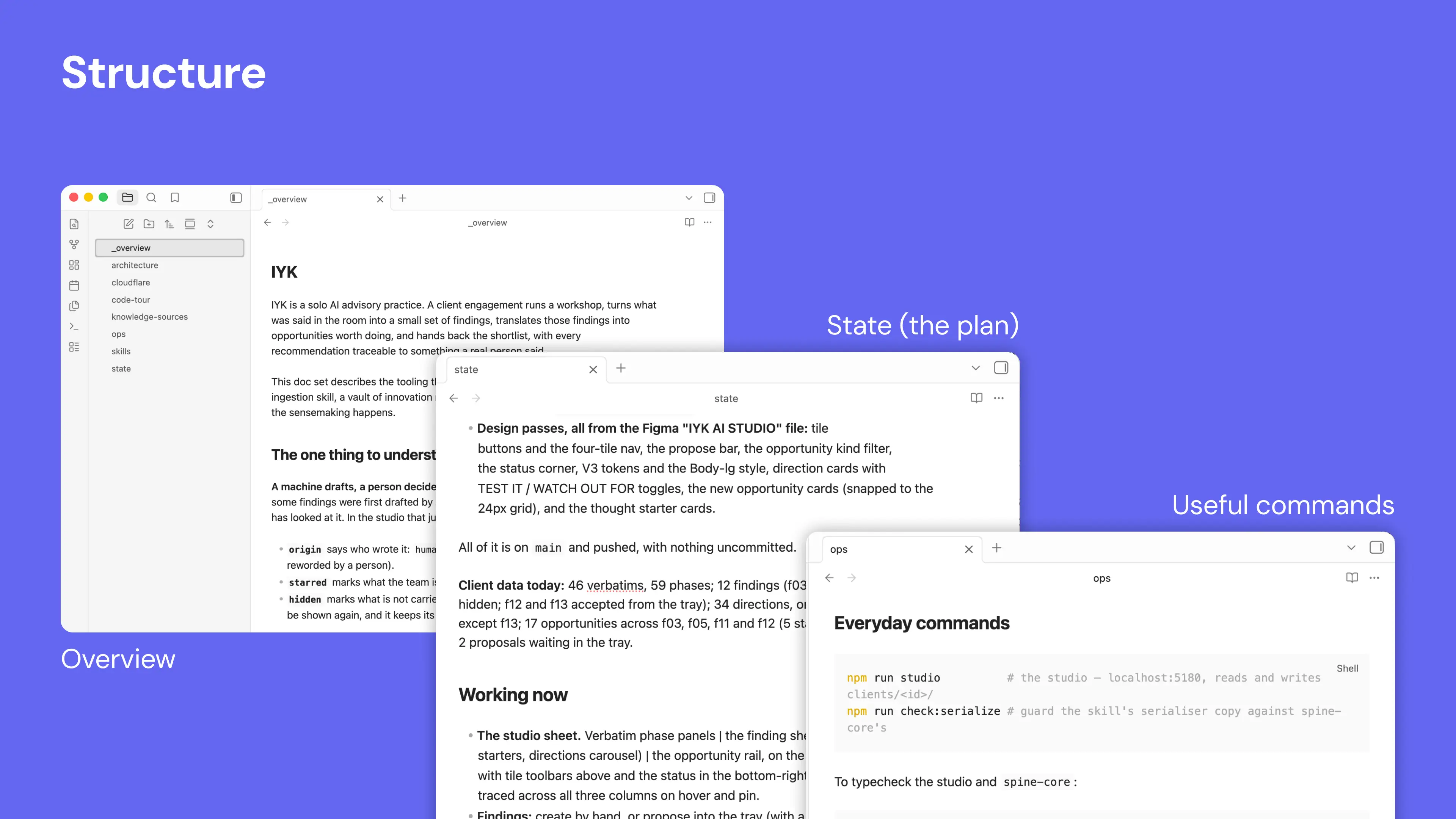
It’s a handful of pages - written in a format called markdown, that can render text so it’s much easier to read.
These are screenshots, by the way, of a free tool called Obsidian, which gives you a user-friendly way to navigate the pages.
The structure is simple:
An overview that lays out what we’re doing and why
A plan - what’s done, what’s next and what’s not yet decided
Then separate pages for anything that’s worth keeping - how things fit together, the decisions that were made, the commands I need when something breaks.
The AI writes them. I read and correct them. Every session starts with a recap, and if I come back in two weeks’ time, it’s easy to catch up.
But what I also found was that the wiki approach is great for capturing all sorts of knowledge. It could be the details of a project, a client account - or a digest of the ways people innovate.
Those client opportunities I showed earlier are built using a wiki, too.
I sat down with Claude and read through the best of innovation practice. Frameworks like TRIZ - built from decades of patents - that boil innovation down to a set of repeatable moves.
With the flip of a card, every opportunity can be traced back to one of these moves - complete with sanity checks and gotchas, so I can stand on the shoulders of giants - and learn as I go.
So to wrap up, I want to leave you with three things to remember:
- Everyone is competent now - it’s time to level up.
- The good news is that it’s never been easier to build something.
- If you decide to give it a go, the humble wiki will help keep you sane.
Thank you.
A while back, I was having a deep and meaningful with a colleague of mine - Claude (you might know him).
Alongside the usual platitudes “Matt, you’re so clever and cool” came a line that stopped me in my tracks.
"Here’s a mirror worth sitting with: this whole argument is about your firm too - not just your clients.”
We were riffing on how competence is no longer enough.
He (it?) was right.
With LLMs, everyone is competent now. That changes the game for every business in this room.
I’ve spent my career helping clients invent, design and build complex software-based products.
Things like an incident management system for the official hospitality provider of the Paris Olympics,
a 3D map of the themes influencing Decathlon’s innovation pipeline,
or helping public affairs professionals navigate the firehouse of information coming out of the EU for Politico.
This used to take teams of people. Strategists, designers, product managers, devs...
In the last 18 months, all that has changed.
Today you can describe an idea to your AI of choice and have something working by lunchtime.
That’s cool. This is not a whinge. I’m excited by it. You - and I - can now build our own apps, change the way we do things, change the way our businesses run.
Building the thing is no longer the hard part.
The hard part, now, is figuring out what to build - and dodging all those rabbit holes:
- Which problem is actually worth solving?
- What does the team really struggle with?
- Where are we leaving value on the table?
So to aim higher than just competent, I realised that I needed to eat my own dogfood - to build a tool that surfaces what’s actually worth building.
I wanted something that helps me be quicker AND better and to improve my thinking over time - not to blunt it.
The standard procedure for this kind of work is to start with a stakeholder workshop - someone from sales or customer success, someone who does the work, someone from the leadership team.
I don’t think that’s changed. It extracts the things that only insiders know.
But it’s not perfect. You end up with 200 stickies that no one will ever read again. And you also seldom spot the opportunity there and then.
The best opportunities come from combining what the client knows with what I know - and what the world knows.
So that’s the machine I built.
A plugin that extracts the mess of what was said and gives it structure.
A process that turns that structure into clear findings - linked back to what people actually said.
And another that turns findings into things to go and do:
The quick wins you can start today...
The ones you can easily get off the shelf...
The value-adding things worth building out
If anyone is interested in hearing more about how this all comes together, come and say hi. I’d be happy to talk you through it.
What I wanted to share today is a quick, free and easy technique that has helped me a lot, along the way.
It’s based around the simple concept of a wiki.
Think Wikipedia - a page for each thing that matters.
Only this one is written by the AI. In plain language that you - and it - can pick up again at any time.
For me, this came out of necessity. I was building stuff with AI, but it quickly got ahead of me:
Code that I couldn’t follow.
Infrastructure that was way out of my comfort zone.
Terminal commands that made me think I was about to bring down the internet.
Most of all - because I hadn’t written it, I had no picture in my head of how it all fits together.
The wiki approach fixed that.
It’s a handful of pages - written in a format called markdown, that can render text so it’s much easier to read.
These are screenshots, by the way, of a free tool called Obsidian, which gives you a user-friendly way to navigate the pages.
The structure is simple:
An overview that lays out what we’re doing and why
A plan - what’s done, what’s next and what’s not yet decided
Then separate pages for anything that’s worth keeping - how things fit together, the decisions that were made, the commands I need when something breaks.
The AI writes them. I read and correct them. Every session starts with a recap, and if I come back in two weeks’ time, it’s easy to catch up.
But what I also found was that the wiki approach is great for capturing all sorts of knowledge. It could be the details of a project, a client account - or a digest of the ways people innovate.
Those client opportunities I showed earlier are built using a wiki, too.
I sat down with Claude and read through the best of innovation practice. Frameworks like TRIZ - built from decades of patents - that boil innovation down to a set of repeatable moves.
With the flip of a card, every opportunity can be traced back to one of these moves - complete with sanity checks and gotchas, so I can stand on the shoulders of giants - and learn as I go.
So to wrap up, I want to leave you with three things to remember:
- Everyone is competent now - it’s time to level up.
- The good news is that it’s never been easier to build something.
- If you decide to give it a go, the humble wiki will help keep you sane.
Thank you.